How to Choose the Right Feed for Your Production System
By Herman Rossouw
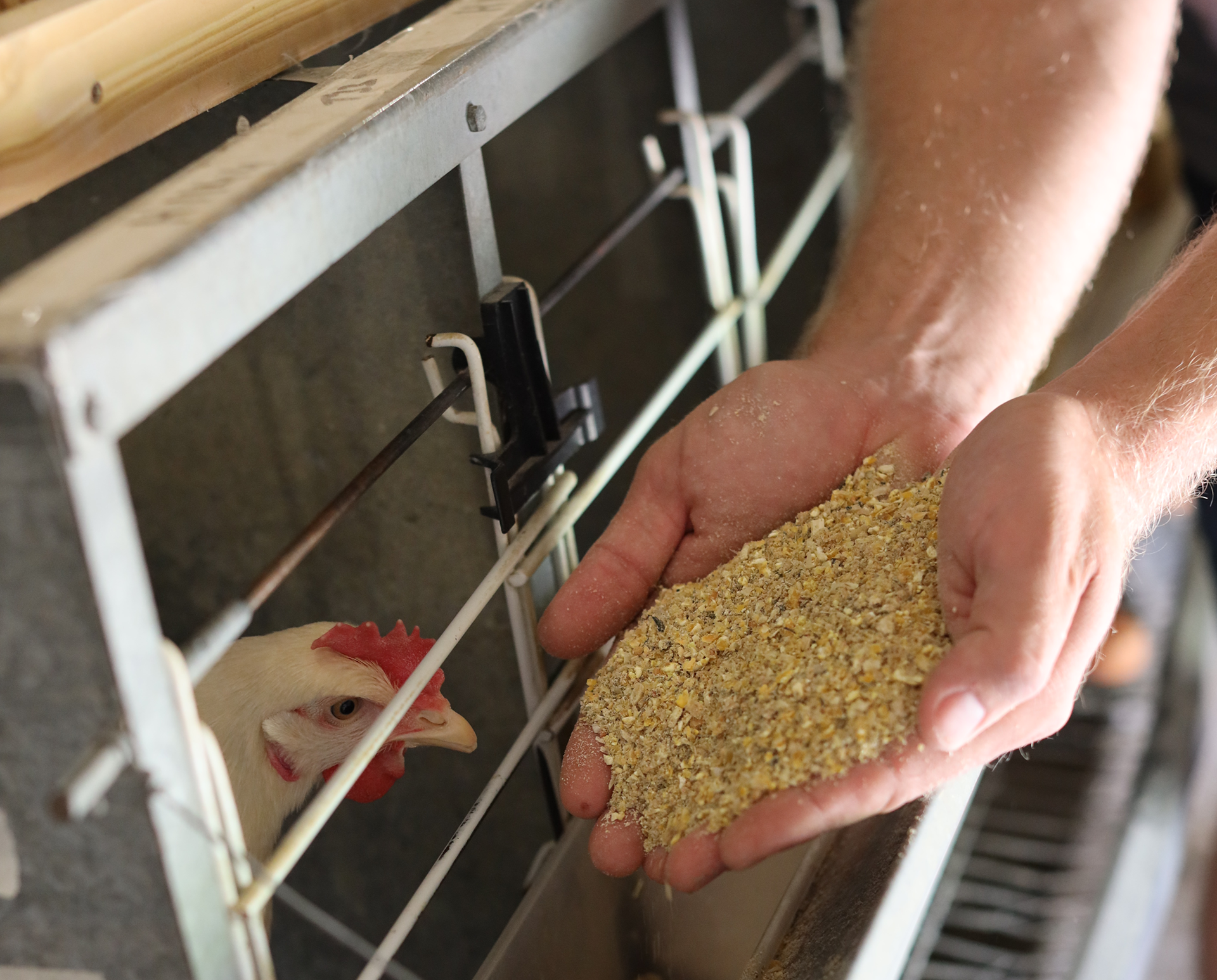
Feed is one of the largest cost components in a commercial egg production operation, accounting for approximately 70–75% of total production costs. When margins are under pressure and egg prices are low, feed cost is often the first area where producers attempt to cut back. However, reducing feed cost without careful consideration can have detrimental effects on egg production, daily feed intake per hen, and overall profitability. In many cases, such decisions ultimately cost more than they save.
It is important to understand that not all “expensive” feeds are optimal, and not all “cheap” feeds are economical. Once this distinction is clearly understood, producers can make informed decisions that best support their specific production systems.
What makes one feed more expensive than another?
Protein and energy are the primary drivers of feed cost, largely influenced by the price of raw materials such as maize, soybean oilcake, and soya oil at any given time. As protein and energy levels increase, feed cost per ton typically rises.
Higher-energy feeds generally result in lower feed intake, as hens meet their energy requirements with less feed. Because intake is reduced, other nutrients—such as amino acids—must be more concentrated to ensure hens still receive adequate levels to sustain production. Conversely, a lower-energy feed leads to higher feed intake, allowing for lower nutrient concentrations while still meeting the hen’s nutritional requirements.
Why is a “cheaper” feed not always more economical?
While the purchase price per ton of a lower-density feed may be lower, total feed usage over time will often be higher. For example, consider a layer house with 10,000 hens consuming 115 grams of feed per hen per day, compared to the same house consuming 120 grams per hen per day. If egg production remains the same (although production is often better on a higher-density diet), the feed cost per dozen eggs produced is effectively the same, regardless of whether a “cheap” or “expensive” feed is used.
If the cost per dozen eggs is similar, why not choose the cheaper feed? The answer lies in risk management.
Managing risk under challenging conditions
Lower-density diets carry a higher risk, particularly during challenging environmental conditions. In summer, when temperatures rise, hens often struggle to maintain high feed intakes. If a diet is formulated on the assumption that hens will consume 120 grams per day, but heat stress reduces intake, nutrient intake will fall short. This can lead to bodyweight loss, reduced egg weight, and a decline in egg production.
In contrast, it is easier for hens to maintain an intake of 115 grams per hen per day during hot conditions. A higher-density feed therefore reduces the risk of production losses and performance declines during periods of heat stress.
When higher-density feeds are not the best option
On the other hand, higher-cost feeds are not always the optimal choice. Feed selection should be guided by both the production system and the target market. In environmentally controlled houses with stable temperatures, producers can often successfully use lower-density feeds, as feed intake is more consistent than in open-sided houses.
If eggs are not graded and income is based primarily on egg numbers rather than egg size, a lower-density diet may also be appropriate. However, management becomes critically important when using lower-density feeds. Feed intake must be closely monitored to ensure it aligns with predicted consumption levels.
Monitoring performance and making informed decisions
Producers should record hen body weights, egg weights, feed intake, and egg production on a weekly basis. Early identification of deviations allows for rapid corrective action. All costs should ultimately be evaluated based on production cost per dozen eggs.
A feed that is more expensive per ton, but delivers higher egg production and lower feed intake, may result in a lower cost per dozen eggs than a cheaper feed that requires greater consumption and yields fewer eggs.
Before selecting a feed, it is essential to do thorough homework. Understand the predicted feed intake and ensure that hens are consistently achieving or exceeding this level. Finally, build a strong relationship with a reputable feed supplier who has the technical knowledge and genuine commitment to supporting and growing your business.
.png)