
Tips for the Successful Early Weaning of Lambs
By Colin Moolman, Ruminant Specialist at AFGRI Animal Feeds
The small stock industry is currently experiencing significant pressure due to low prices, drought conditions, and losses caused by predators. This has made it necessary for farmers to explore more intensive lambing systems. Intensive lambing systems can also be viewed as a way to increase ewe numbers, as fewer animals need to be maintained on pastures or veld.
The biggest cost in intensive lambing systems is the feed consumed by ewes before and during lactation. It is therefore essential to keep the feeding period as short as possible. Early weaning of lambs also plays a key role in the profitability of the farming operation. Intensive systems, whether lambing pens or ewes lambing in small camps or on pasture, all share the same drivers for successful early weaning.
There are four important phases during the lambing season:
- The three weeks before lambing
- Zero to seven days after lambing
- One week after lambing until weaning
- The period after weaning
Three Weeks Before Lambing
It is very important to adapt ewes to the ration they will consume after lambing during the three weeks before lambing. A high-quality ration with sufficient bypass protein (for example, AFGRI Complete Lactating Ewe Pellets) should be fed to ensure that ewes produce enough high-quality colostrum. Adapting animals to the ration is crucial, as metabolic disorders such as acidosis must be avoided.
During this period, the foetus must receive adequate nutrients from the ewe to ensure that strong, healthy lambs are born. Ensure that ewes are free from internal and external parasites and that all vaccinations are up to date. Ewes should be handled as little as possible and with great care around lambing time.
Zero to Seven Days After Lambing
Adequate supervision during the birthing process is necessary to ensure that all lambs receive sufficient colostrum within the first 24 hours. Because stocking densities in intensive systems are very high, hygiene is extremely important. Dirty or wet lambing pens can lead to significant losses. It is also advisable to treat all lambs’ umbilical cords with iodine shortly after birth.
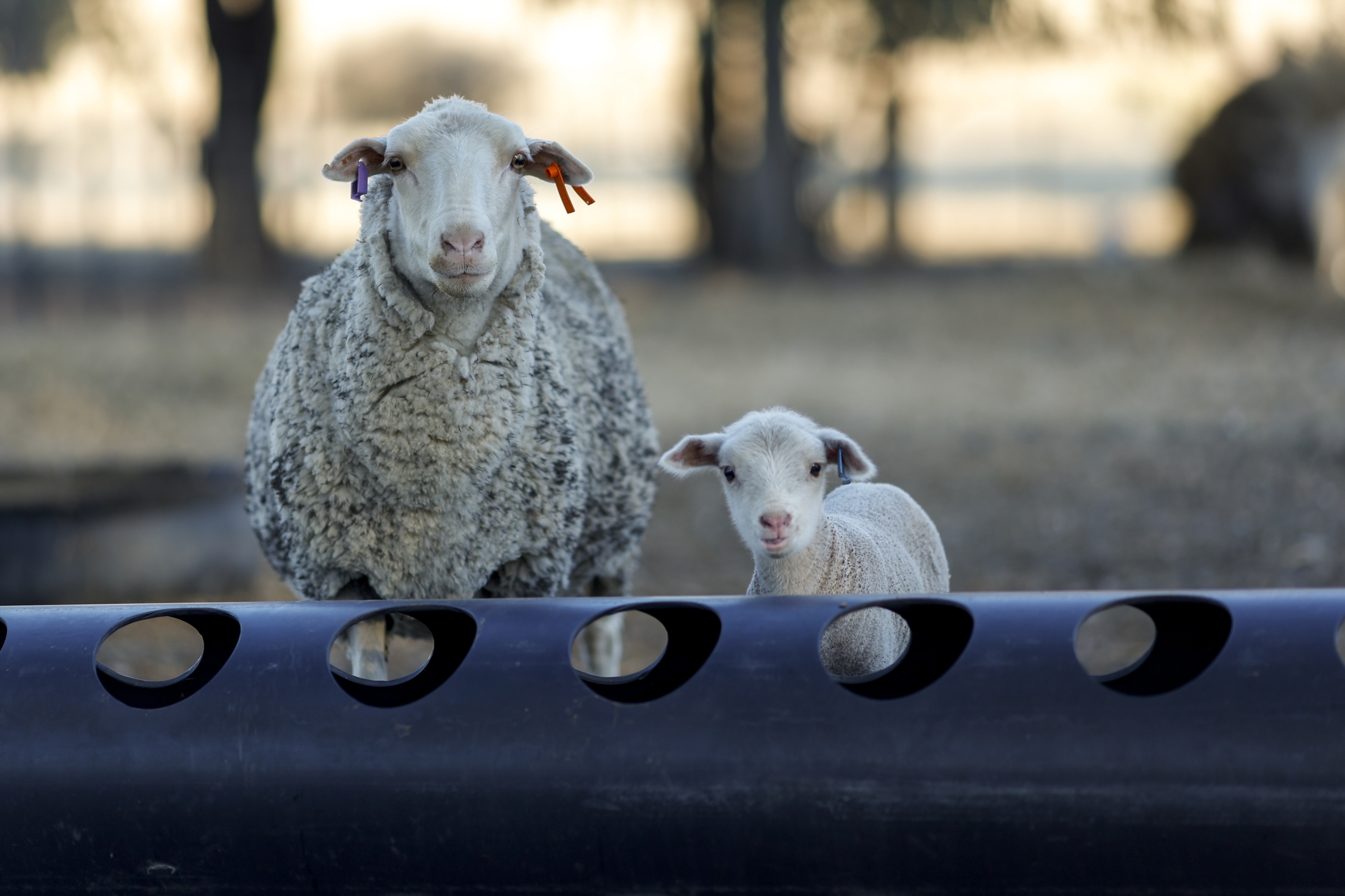
Clean water troughs are undoubtedly one of the most underestimated contributors to successful livestock production.
Ewes and lambs should be disturbed as little as possible. This helps ensure a strong bond forms between the ewe and lamb before they are placed in larger groups. If ewes were properly adapted to the lactating ration beforehand, their feed intake during this period will be noticeably higher. This will lead to increased milk production, and ewes will consequently wean heavier lambs.
One Week After Lambing to Weaning
To successfully wean lambs early (42 to 60 days), they must have access to high-quality creep feed (such as AFGRI Super Lamb Creep Pellets) as soon as possible. Lambs should already be consuming about 15g of creep feed by two weeks of age, with intake gradually increasing to 600g per day.
The creep feed must contain adequate levels of high-quality protein and energy. Particular attention should be paid to supplying the correct amino acids during this period. The genetic potential of young ruminants is largely determined during this phase. Lamb growth during this period can therefore have a significant impact on the animal’s lifetime productivity.
The roughage used in creep rations should be of very high quality and preferably ground. Lambs have an excellent feed conversion ratio during this period and it can be as low as 1:1. The younger the lamb, the better the feed conversion ratio. As lambs get older, this ratio deteriorates to around 5 to 5.5:1.
Ewes’ feed intake will also increase during this period to approximately 4% of their body weight, compared to around 3% during late pregnancy.
A good guideline for determining when to wean is when lambs reach 45% of the ewe’s mature body weight. Synchronisation of ewes results in shorter lambing seasons and simplifies management of the weaning process. Lambs will be more similar in age and can therefore be weaned together.
Ensure that all vaccinations and dosing programmes are up to date before lambs are weaned.
The Post-Weaning Phase
Weaning is a very stressful period for lambs. Every effort should be made to minimise stress and maintain feed intake at the highest possible level. Weight loss should also be avoided.
It is strongly recommended that lambs remain on the creep feed ration for up to two weeks after weaning before being transitioned onto a feedlot starter ration.
Lambs that have received creep feed and are weaned onto it consistently perform better in the feedlot than lambs that have not.
.png)